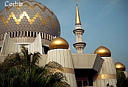
Mosque in Kota Kinabalu
June 27, 1997
Before leaving Kota Kinabalu we went to visit Sabah Theological Sminary. Although Walla and Biz Lempp were already in Germany, they resonded to our email from KK and encouraged us to go up and meet the principal, Dr Thu En Yu, and learn more about the role of Christians in Sabah. The Seminary is a modern facility on a beautiful campus on top of the hill overlooking downtown KK. Dr Thu graciously served us Chinese tea while telling us that Christianity was brought to Sabah 150 years years ago or more by Chinese Christians who moved to Borneo from the mainland. Unlike other places we've visited so far, Christianity was not brought to Sabah by missionaries. The Sabah population is only about 30 % Islam, Dr Thu said, but due to government pressure and the influx of West Malaysians it's a growing percentage.
At the seminary the more than 200 students plus faculty live in cultural richness, sharing traditions from the varied backgrounds of everyone present. All festivals are honored; new year is celebrated three times! Dr Thu glowed with pleasure telling about hte joy of learning from each other and learning to love each other. We told about the jubilant service we had at Central with the folks from Bethel in Chicago and how fun and unusual it was to hear the amens and hallelujahs in our traditional sanctuary, which prompted Dr Thu to mention that the pentecostal style services were becoming more common in Sabah, along with the literalist theology, as elsewhere in the world. Before we left Dr Thu presented us with a seminary paperweight in honor of our visit. The seminary logo, STS, in addition to standing for Sabah Theological Seminary, stands for Study To Serve. Dr Thu likes to note that although over 90 % of the full time students became parish pastors, most of the part time students to not, but they become better servants as managers, teachers, engineers, etc. I'm very happy we had the opportunity to meet and visit with this fine, caring man.
June 19 - 21
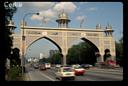
Thursday morning we flew from Kota Kinabalu in Sabah, on the island of Borneo, to Kuala Lumpur, Malaysia's capital, toward the west side of the peninsular Malaysia. The task in KL was to get my passport replaced. We went to the embassy immediately after stashing our gear at the hotel and were greeted enthusiastically.
"We've been following your case," we were told, then heard about the additional newspapers that reported the lost-in-the-jungle story, articles we hadn't seen, and may not see, and had to answer the questions again. But the second day I had the passport, and by the third day I had replaced my Malaysian visa. We also had the camera re-repaired, this time by a reputable worker; bought a couple new shirts and a pair of sandals; and squeezed in a little sightseeing of buildings with intricate Moorish architecture - not including the national mosque, which is a sleek, low-slung recent building that reminds me a bit of the coliseum in Seattle. (Now Key Arena Bob reminds me.)
The hotel recommended by Lonely Planet, Coliseum Hotel and Cafe, is exactly my cup of tea. Well, tea is not the beverage sold most by the Chinese barkeeps behind the huge mahogany bar, complete with mirror that must have once had a painted lady on it. The place is reminiscent of a cross between the old Ben Paris in Seattle and the Pantry in Los Angeles. It's pretty tattered around the edges, but the middle-aged fellows in white coats are quick to help you in the bar, or the cafe, with it's not-any-more-white tablecloths, or up the back stairs to your hotel room with mahogany stained wainscotting, desk, vanity, and tavern style door. This place has a history, since the twenties or earlier, which is noted in newspaper clippings on the bar and cafe walls. Alongside one ad for the Coliseum Cafe in a 1921 paper is an article of advice on what to do when your servant has malaria (tea and stay clear). The Coliseum was a popular place in colonial time. Adjacent to the cafe, with hotel upstairs and back of the bar, is the Coliseum Theatre. The entire complex was purchased by a Chinese woman in the fifties, who revived it to it's earlier grandeur, and made sure the theatre kept showing films even through the difficult time of television competition. A 1989 article pictures her, in her eighties, still going strong and maintaining the policy of the place. We were lucky to get a room, even though it was farthest from the bathrooms, because travelers now, no longer empire builders, keep the rooms full, and the local people fill the cafe and bar. May it go on and on.
June 22-28
West Malaysia is a modern place, and quite westernized. Instead of seeking cultural experiences here we decided to thoroughly enjoy some beaches. On Sunday, June 22, we flew from Kl to Kuala Terenggans, on the peninsula's east coast about 2/3 of the way up before the Thai border. In the state of Terenggans, (the first two vowels are almost silent) are the Perhentian Islands, Perhentian Kecil (small Perhentian) and Perhentian Besan (big), noted as being the most beautiful islands in Malaysia. After hitching a ride away from the city, we took a boat to Perhentian Kecil to a little cove with sparkling aqua water and an accommodation named D'Lagoon. The chalets owned by D'Lagoon have no competition on the tiny cove, but the price was right at RM15 (less that $7.50 US). Other than the occasional taxi boat, there is little sound except the surf. And in the water is a glorious world of coral, mollusks and fish. There is no Oshear reef wall, a drop off to a much deeper ocean floor, such as we enjoyed on Bunaken Island off the coast of Sulawesi. But the coral garden completely fills the cove and follows the shore beyond the headlands at each endo f the beach. We snorkled for hours every day for five days, thrilled with everything we saw: more hard corals than soft corals, but plenty of anemones waving in the currents to liven the background scene. Parrot fish bigger than we'd seen before, vast crowds of trumpet fish, zebras and clown fish. (Bob and the clown fish loved ripping at each other.) Huge bumpheads in a large, bright blue clump just a couple metres off shore - ten of them at one time was the record. And the highlight of the week, a glorious green turtle about a metre long that we followed for ten minutes or more before she dug in under a deep rock and settled in for a rest. It was hard to tear ourselves away after the week's beauty and serenity, but had to go back to Kuala Lumpur to arrange Burma Visa and collect package from home, at the embassy.
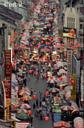
We returned to KL on Saturday morning, just in time for the weekly market that closes the street Jalam Tuanki Abdul Rahman in front of the Coliseum Cafe and Hotel. The night market is a wonderful cacophony of people, conveyances and equipment that lights the night sky and delights the ear with it's youthful enthusiasm. The Coliseum was booked full when we arrived, but from our windows at the neighboring Rex - less charm, more dust, more ringgits - we watched young couples stroll hand in hand through the evening's entertainment. They allowed us older folk to join them and we brought back to our room a feast of barbequed chicken balls (like meatballs, only whiter) egg rolls, noodle soup and roasted corn. As we continued our domino tournament in front of our windows, we watched enthusiasm turn to weariness, and after the young strollers went home, the middle-agers closed up shop for the evening. It was like breaking camp when you take down the tent with the clanging aluminum poles, fold up the camp stools and chairs and try to cram it all in the car. The merchants folded the complicated legs of their tables and carefully packed their merchandise and equipment into vans to haul to the location of the next night market. How much more difficult for them than those lucky enough to have shops. But they weren't the ones who had to rake up and dump the garbage, because three crews KL sanitation department came through with midnight meticulousness: first a rubbish collection truck with personnel who made me wince as they tossed trash baskets into the compactor, including the hand-woven grass bushel baskets, then a flatbed truck and personnel to collect the city's large plastic trash barrels, now empty; and finally a truck and pump and pickup crew to wash the street and eliminate any remaining detritous. While watching them I remembdered the times on 82nd street when young Joe and I would weekly scurry to the front window to watch the garbage truck and crew do their important duty, and saw pride in those marching below me in Kuala Lumpur.
On to the next journal
Back to journal index page
Back to map page
Back to alan's home page